The Coverage Gamble
Tracking Data + Data Viz

Wanted to briefly highlight the current pick-and-roll defense climate for the Knicks, and give clarity. I remember when Karl-Anthony Towns talked about how he prefers playing up at the level of the screen, using his length and activity, rather than sitting back in drop coverage with the sole goal of keeping the ball-handler and roller in front.
That preference matters. It wouldn’t surprise me if drop coverage leads to some level of disengagement for him. Part of the reason Towns has been pretty solid defensively, in my opinion, is that he’s being asked to be a more active participant in the coverage, reacting, influencing space, and impacting the play rather than passively containing it. It can also come with some downsides that we will briefly discuss.
Coverage Trends
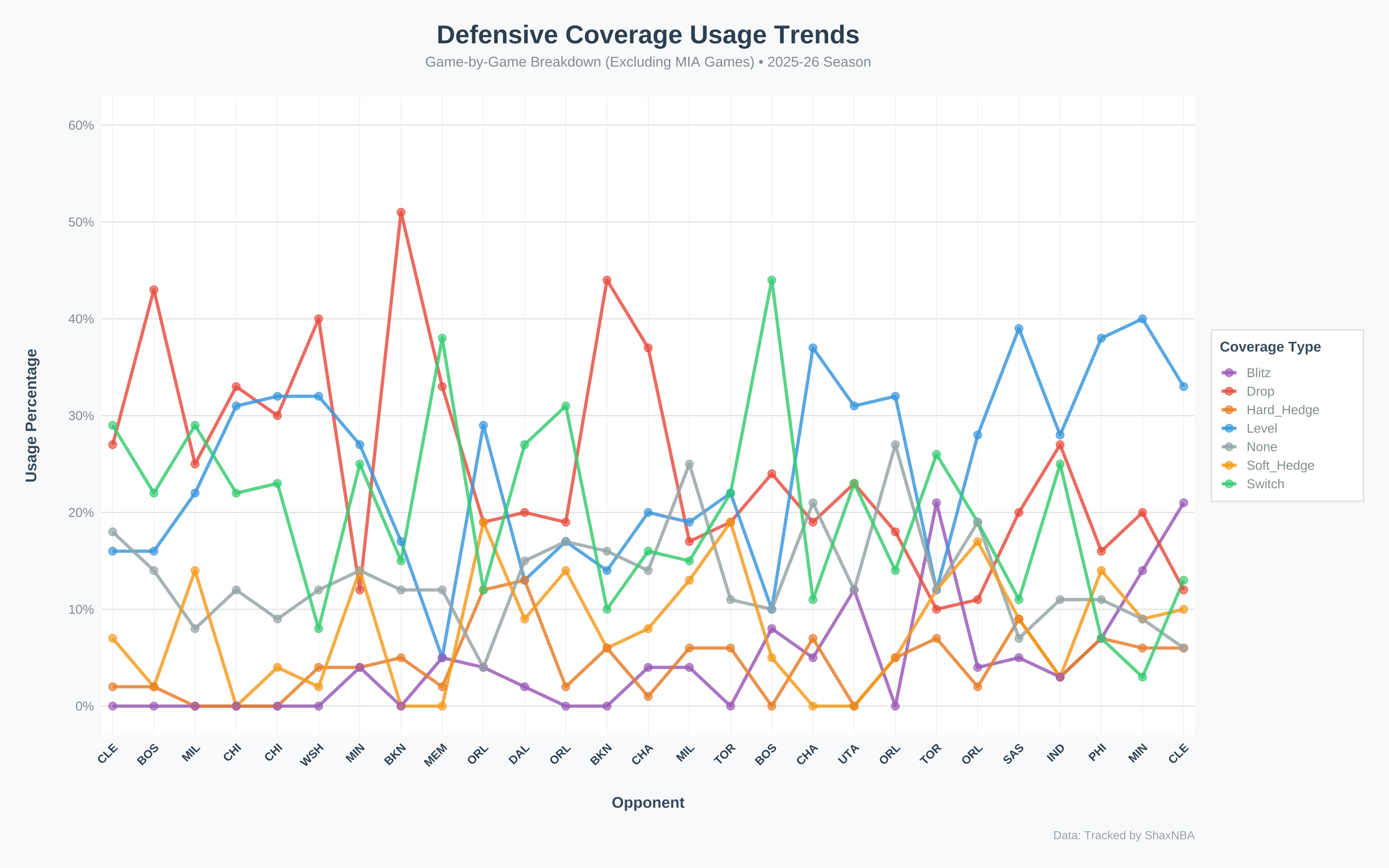
While I don’t yet have last season’s data (eventually I will), the Knicks’ use of level coverage has been a more prominent component of their pick-and-roll defense, especially more recently.
What does “getting level” mean? It refers to the center playing closer to the level of the screen, often in a higher drop, before retreating back into the play.
KAT gets level rather than dropping back. One reason a team might deploy this coverage is to keep elite pull-up threats like Darius Garland or Donovan Mitchell at bay. If KAT drops, he’s conceding the midrange pull-up in exchange for staying home and protecting the rim. In that sense, drop coverage is a more conservative, analytics-driven approach: prioritize the rim and live with midrange attempts. The modern NBA has complicated that.
