
Josh Hart has now been defended by the opposing center on 128 half-court possessions. This isn’t new, yet I find myself bringing it up almost every day with this team. Hart is a major driver of their success, so he’s going to play, and should play many minutes. That means it’s on Mike Brown and the coaching staff to navigate the counters teams throw at Hart and the offense. So far, they’ve handled it well despite my doubts about them consistently finding solutions to a problem I deemed, significant enough to alter their half-court identity. The verdict isn’t out just yet, but it’s been promising. So what’s different, and will it sustain?
Running offense
The Knicks in general run more offense than last season. Between their motion plays and now Brown installing their sets, it’s a common trend to find them near that 70% mark:
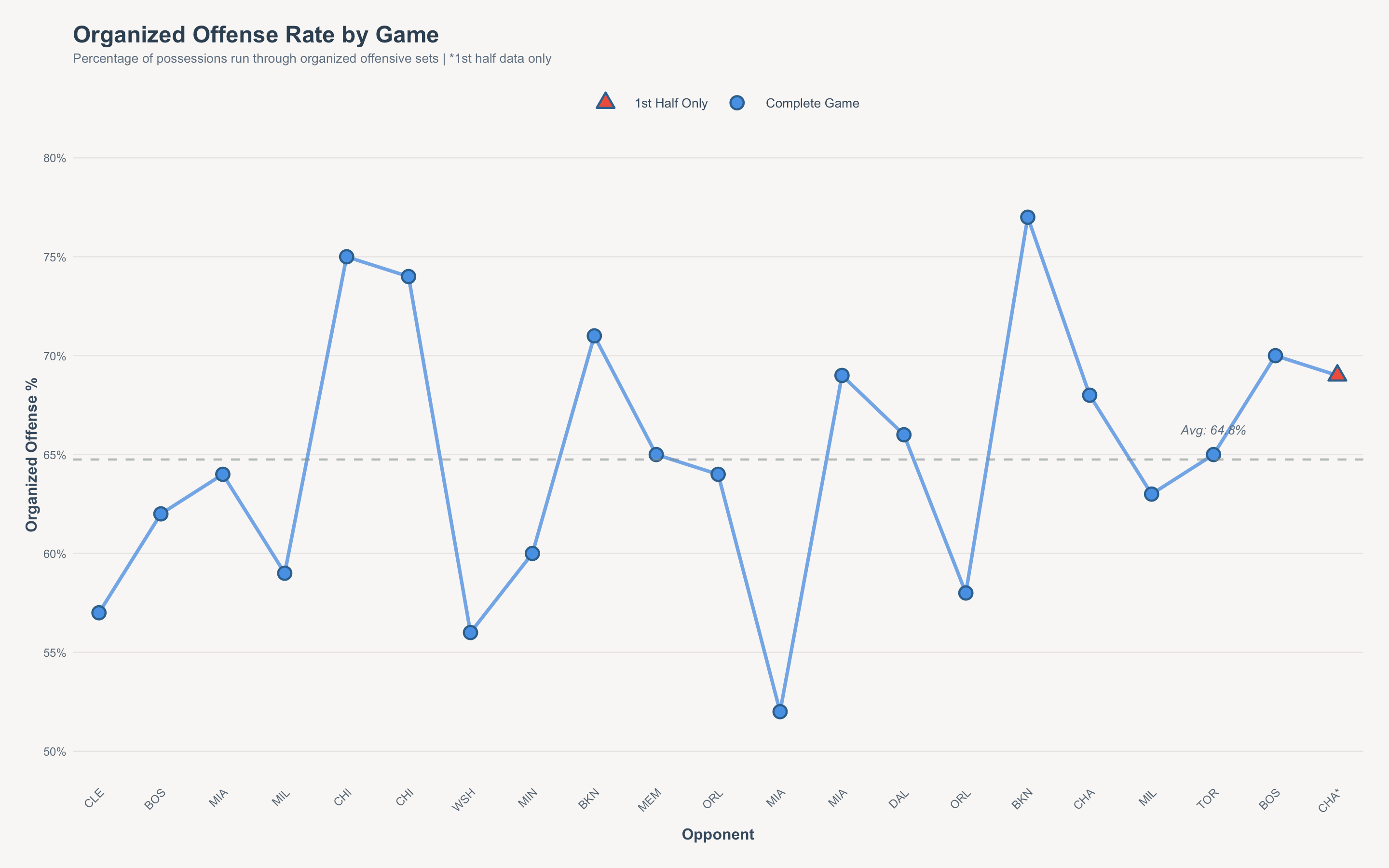
For reference, I tracked over 30 games under Tom Thibodeau, and only a handful ever crossed the 60% threshold, and those came when Jalen Brunson was out, essentially forcing the Knicks to run more organized offense by necessity. So what does this have to do with Josh Hart, and why does it matter?
Because the gap between organized offense and freelancing is large with this group, and shows up in the results. The Knicks are scoring 1.05 PPP (1.11 ePPP) in the half-court when they’re running plays, compared to just 0.88 PPP (1.02 ePPP) when they freelance. That’s a massive drop-off, in their actual shooting.
Now does that matter who the center defends? It does not:
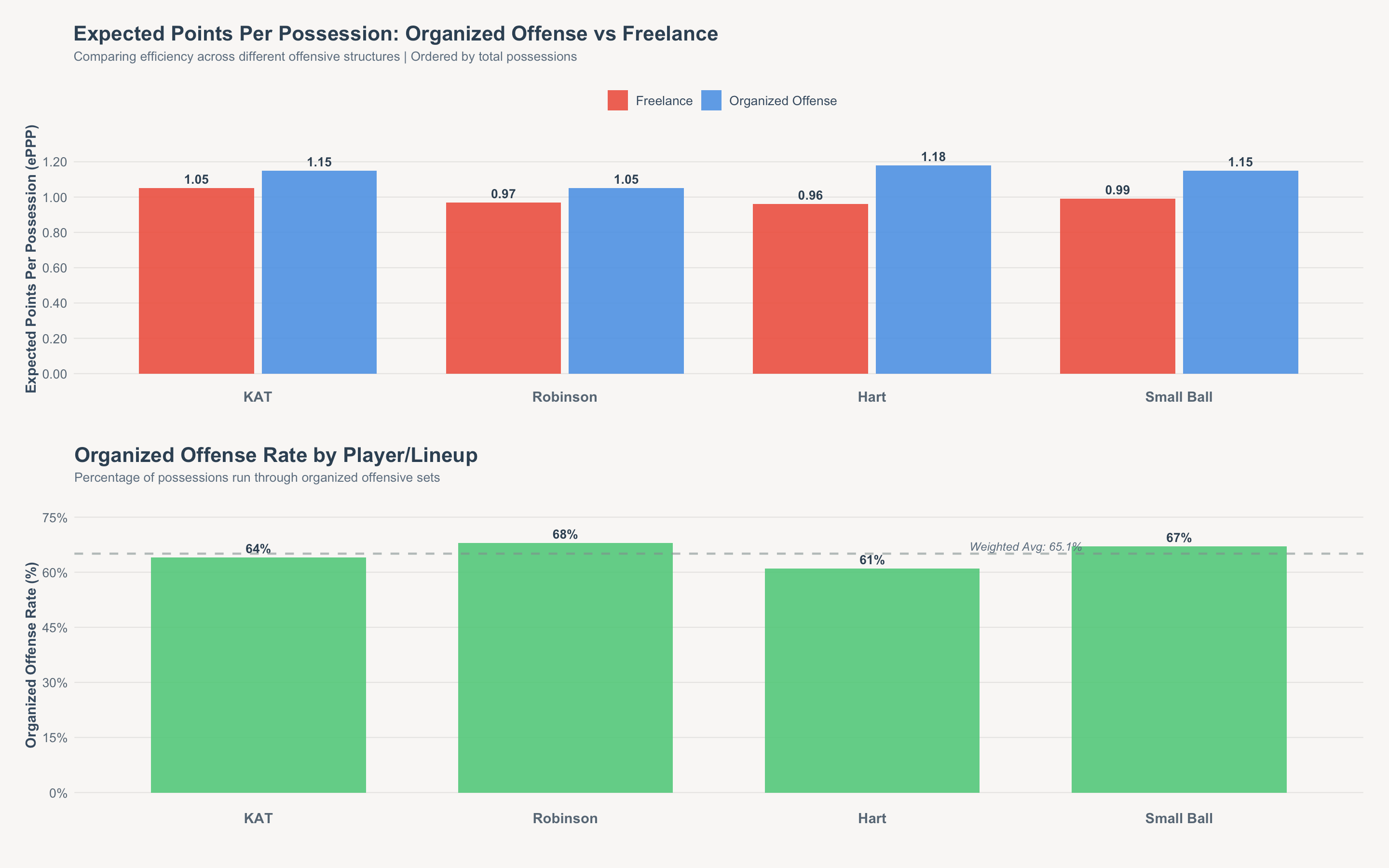
In fact, running offense with the 5-man on Josh Hart is producing better results than any other variable tracked so far. His organized-offense rate is still sitting at 61%, and while that number should climb, the fact that it’s already that high is impressive. What fascinates me is how stark the contrast is between last season and this one. I genuinely expected the tactic to force the Knicks into basic ball-screen actions with Jalen Brunson. Instead, it’s turned into something dynamic and complex, and the results reflect that.
Manufacturing Corner Threes
Sticking Josh Hart in the corner isn’t a great option when he’s being guarded by a big. That defender can see the entire floor as the low man and help freely, knowing Hart isn’t a major threat in that spot. The key word here is “manufacture”, the Knicks have to actively create advantages through Hart’s movement, whether it’s cutting toward the corner or slipping into the dunker spot. And they do that extremely well with many players.
Like we saw in the first video this is what I believe can make a difference in his shooting impact:
Hart sets the wedge screen and then relocates to the corner. Yes, x5 still helps off, but Hart is now arriving into that spot through action, which puts him in position for a much cleaner look. That’s what I like most about this play, he becomes a threat after being used actively, not just by standing in the corner:
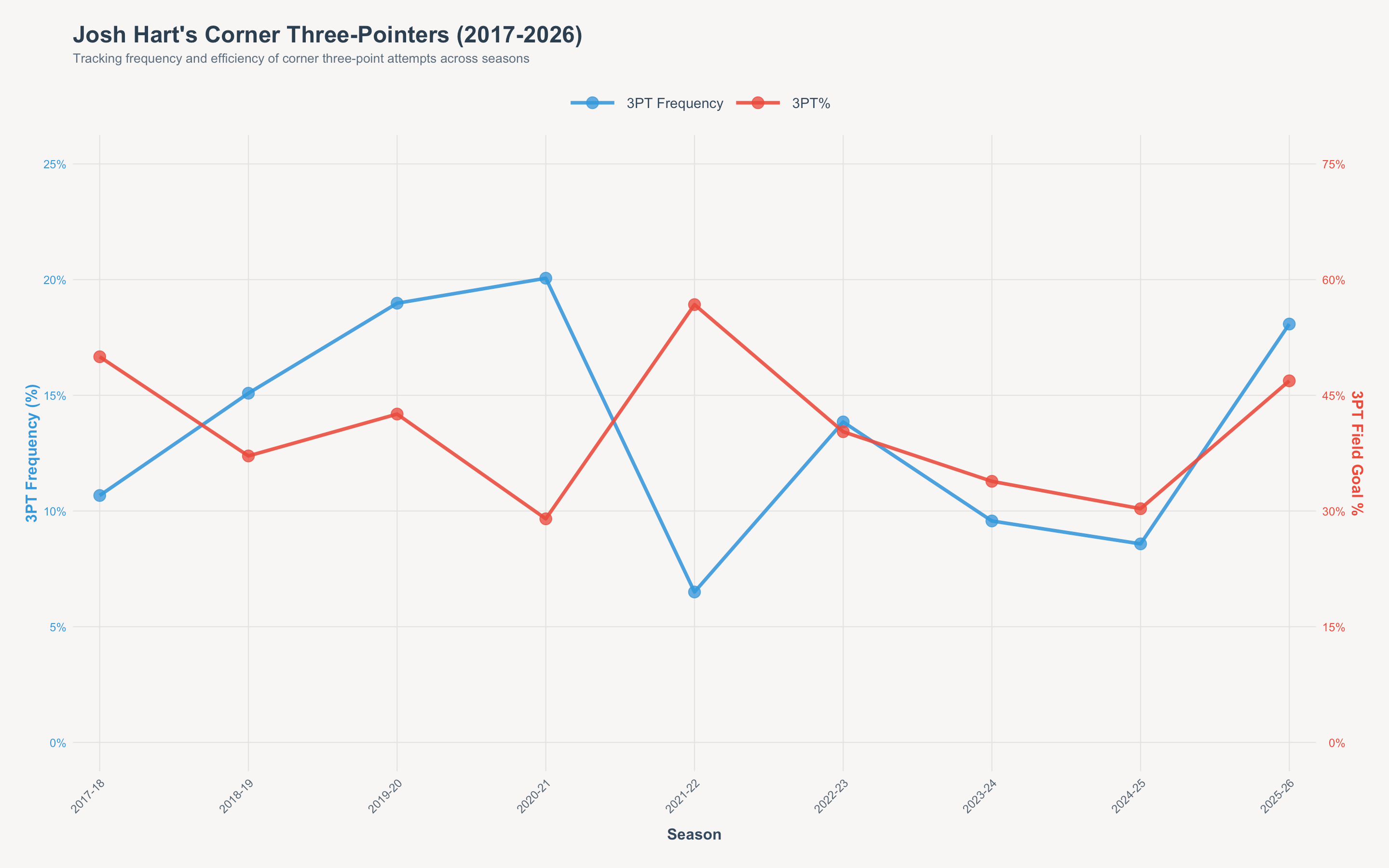
Hart is taking corner threes at his highest rate since 2020–21, and that trend lines up with a broader emphasis the Knicks have placed on generating corner looks this season.
Worry
My concern with the 5-man on Hart and it’s early success, is the shot diet compared to the other center combos:
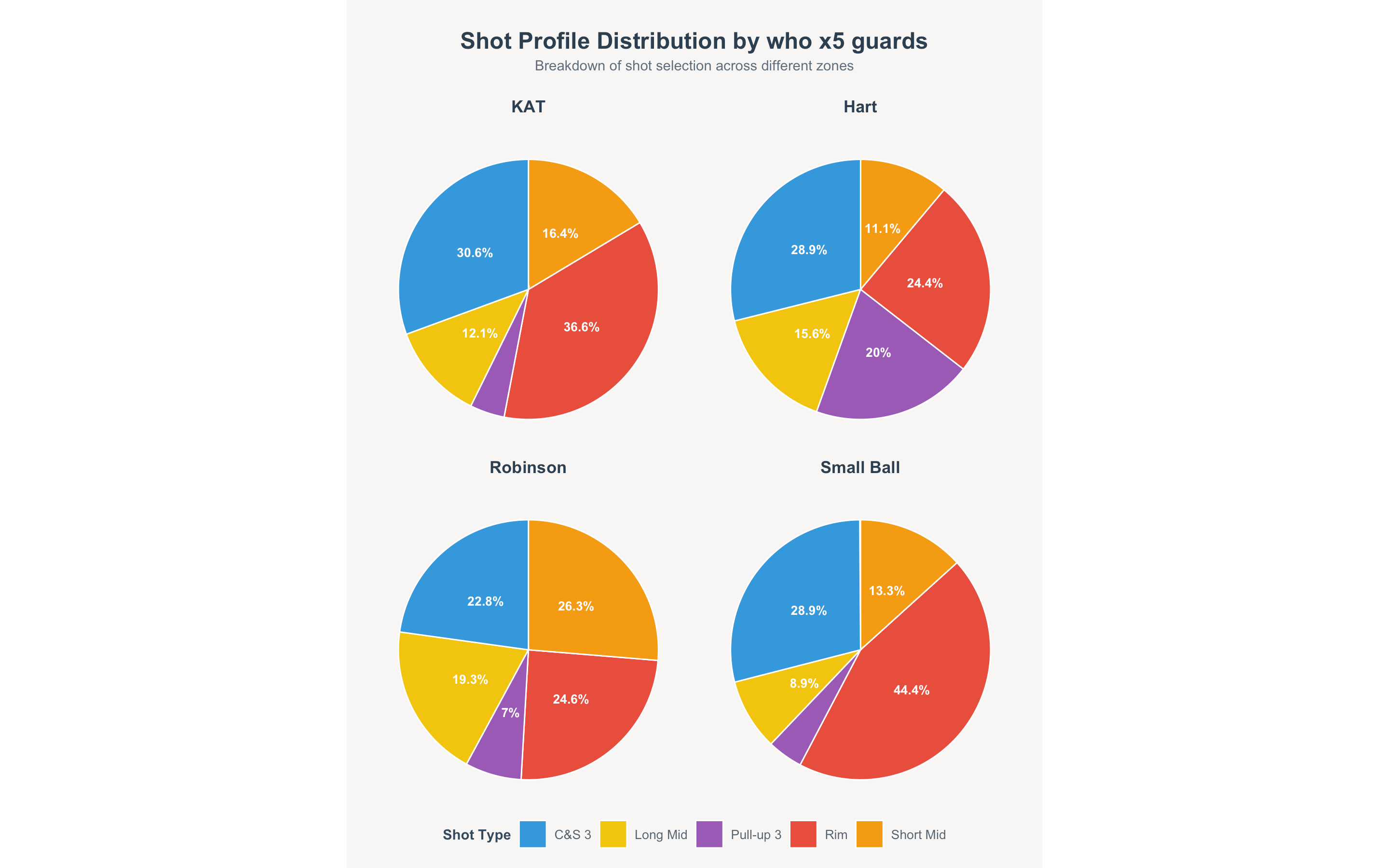
When Hart is defended by the opposing big, the volume of pull-up threes rises dramatically and the rim attempts drop to the low end. The key is that the catch-and-shoot threes have held steady. As long as those remain at their current rate, the Knicks can still generate efficient offense out of the matchup.
For more on the new action covered in the video, this was an action they used last season for KAT:


