Helping Themselves
Play Breakdowns, Data

I wanted to take the opportunity to write about one of my favorite concepts in basketball, one that sits in its own category, separate from set plays and motion offense alike. That concept is help beaters. The name says it all: a help beater is designed to punish the help defender sent on a post-up or isolation, it can happen on a freelanced or set play. I've referenced them in passing throughout previous articles, but this one goes deep. Save it, and come back to it, this is the full breakdown.
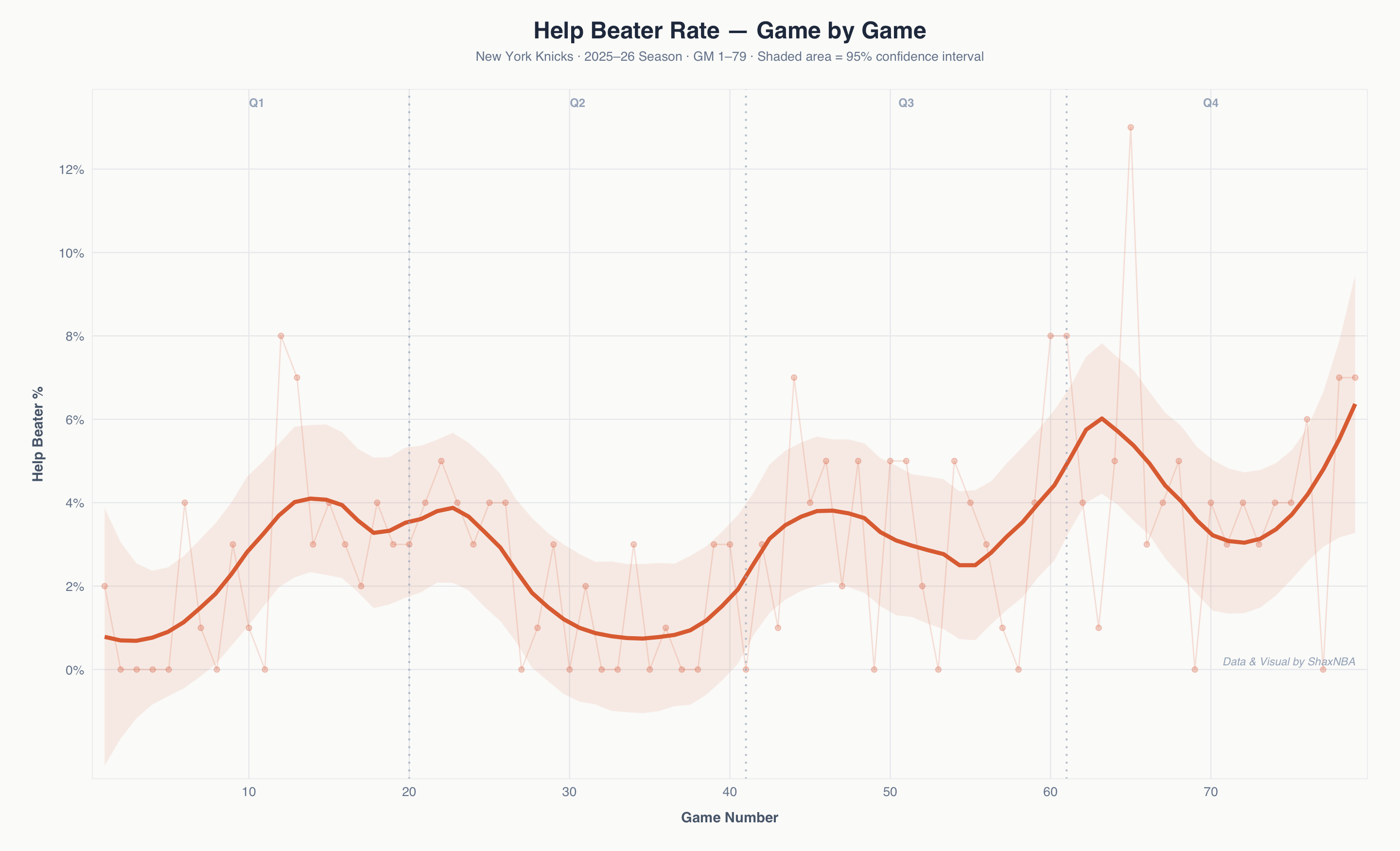
As we know by now, the Knicks have overhauled quite a bit of their system this year, taking into account both star players in Jalen Brunson and Karl-Anthony Towns, providing them with more isolation and post-up chances respectively as the season went on, whether that’s in set plays or freelancing. Through that, we'll notice a more consistent rate of help-beater possessions.
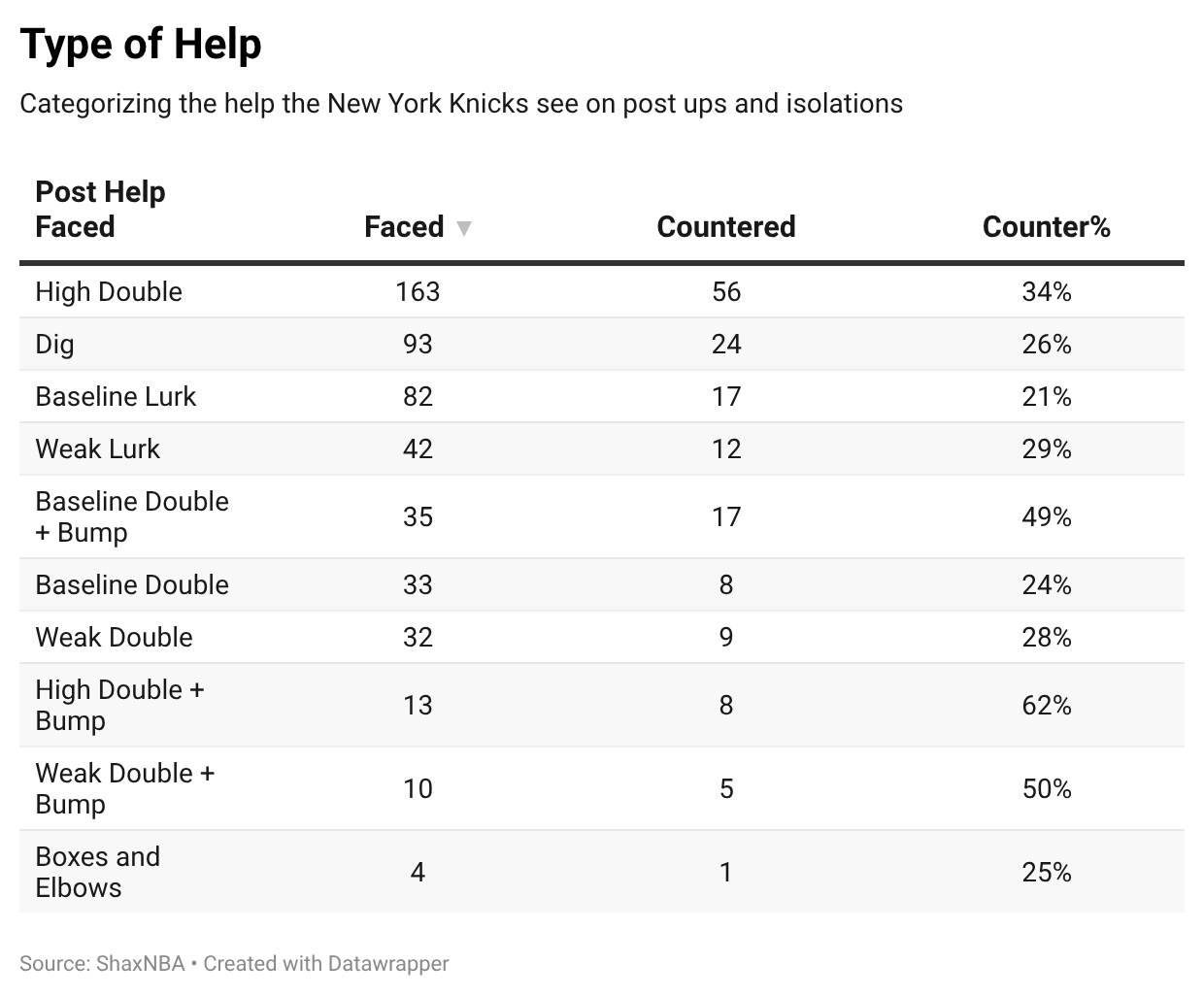
Introducing the types of help we may see in a game on isolations and post-ups. We will go over some of these shortly, but for now, take a look at how often the Knicks face each type of help as well as the counters they send against it. The two most prominent types we will examine closely are high double and baseline help.
High Double
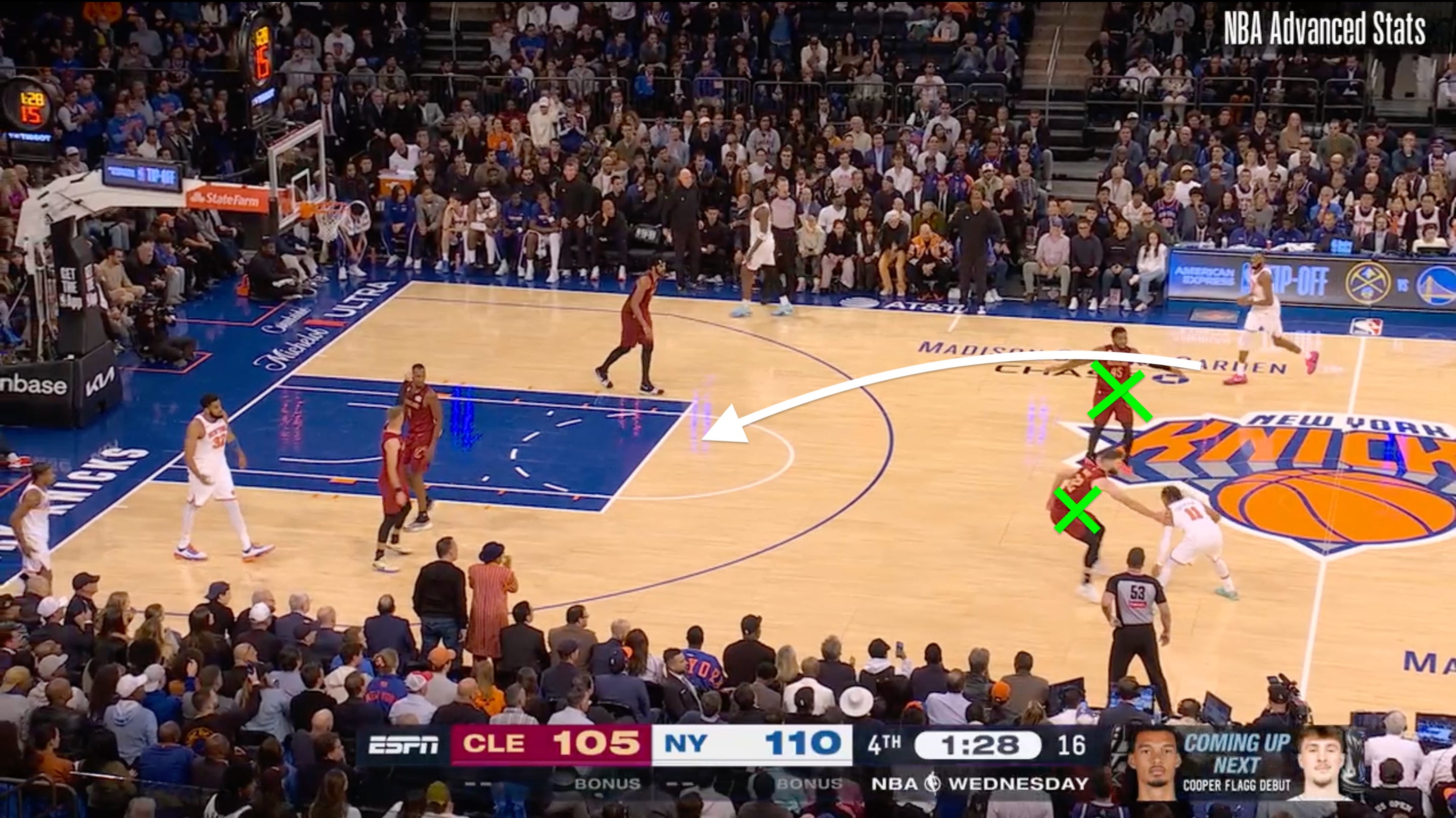
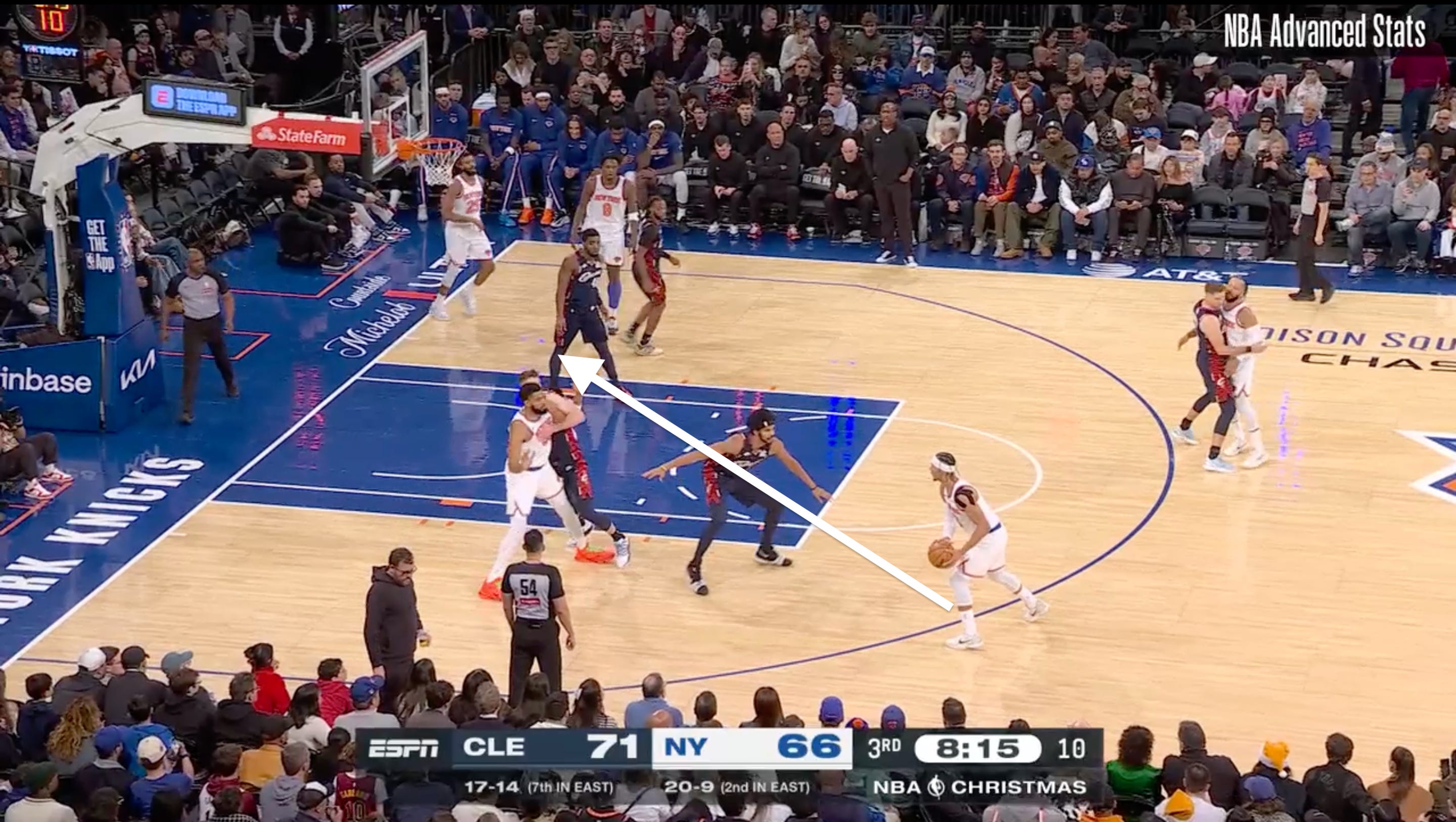
When do we see a high double or strong-side send the most? Brunson isolations and end-game situations where teams want to get the ball out of his hands, as Cleveland attempts to by sending Donovan Mitchell high. What's the counter, and what does that look like? Mikal Bridges flashes to the middle of the floor instead of sitting on the wing, beating the help, by giving Brunson an outlet to create the advantage.
The high double is very similar to a blitz situation, where you want the roller to go towards the middle of the floor creating a pocket. The difference here is that there is no ball-screen, so ideally the player must make their way to the middle.
High doubles are counted as strong-side doubles so here we have OG Anunoby in the post with Towns setting a pin-down for Jordan Clarkson taking away any possibility of a high or strong-side double.
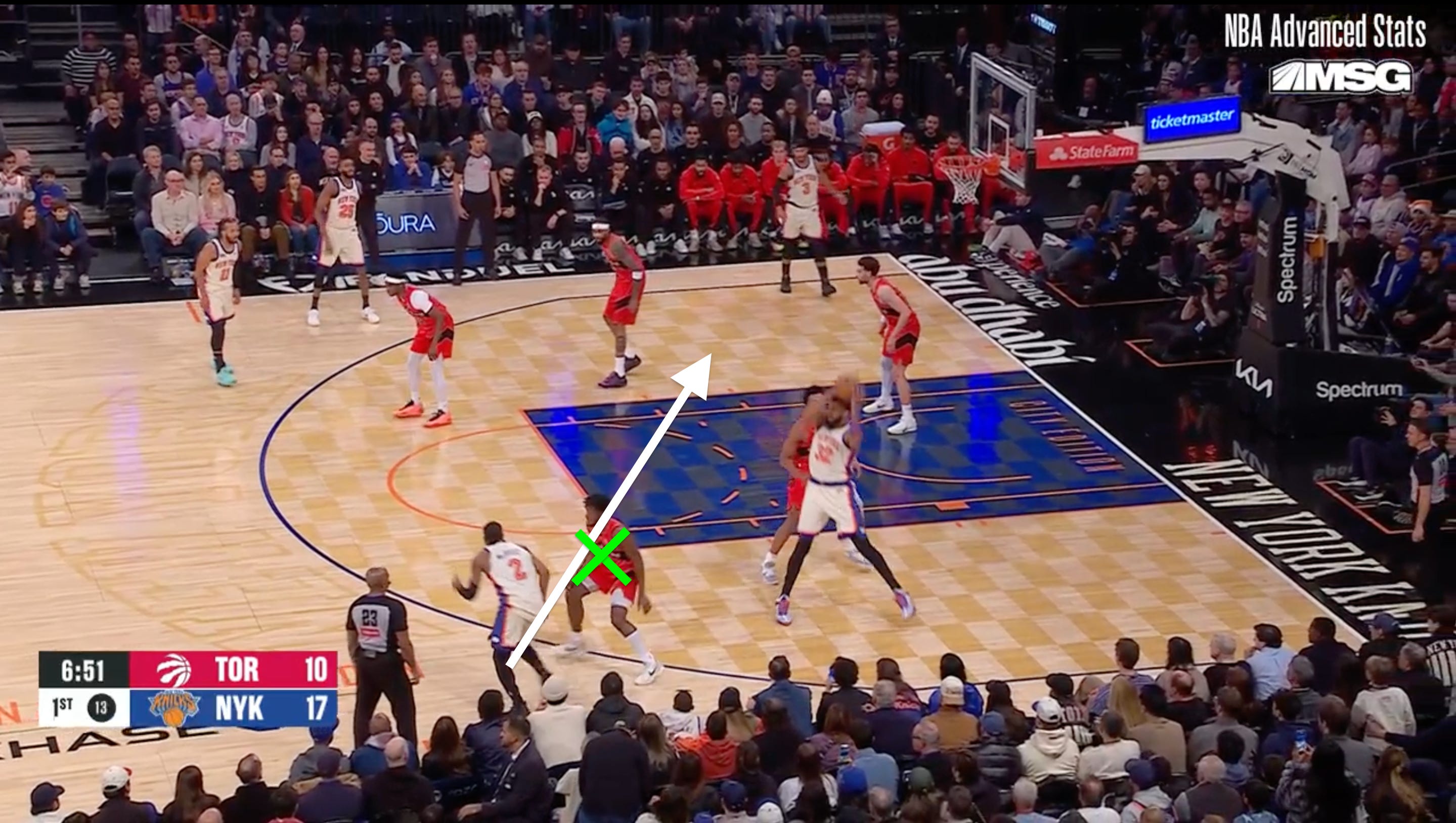
The strong-side player can simply cut towards the weak side of the floor, drawing the high or strong-side help away from the post up as well. Even though the play doesn't end cleanly, we see that when Miles McBride vacates the area of the action, he creates a larger gap for Towns to attack.
Flare Counter
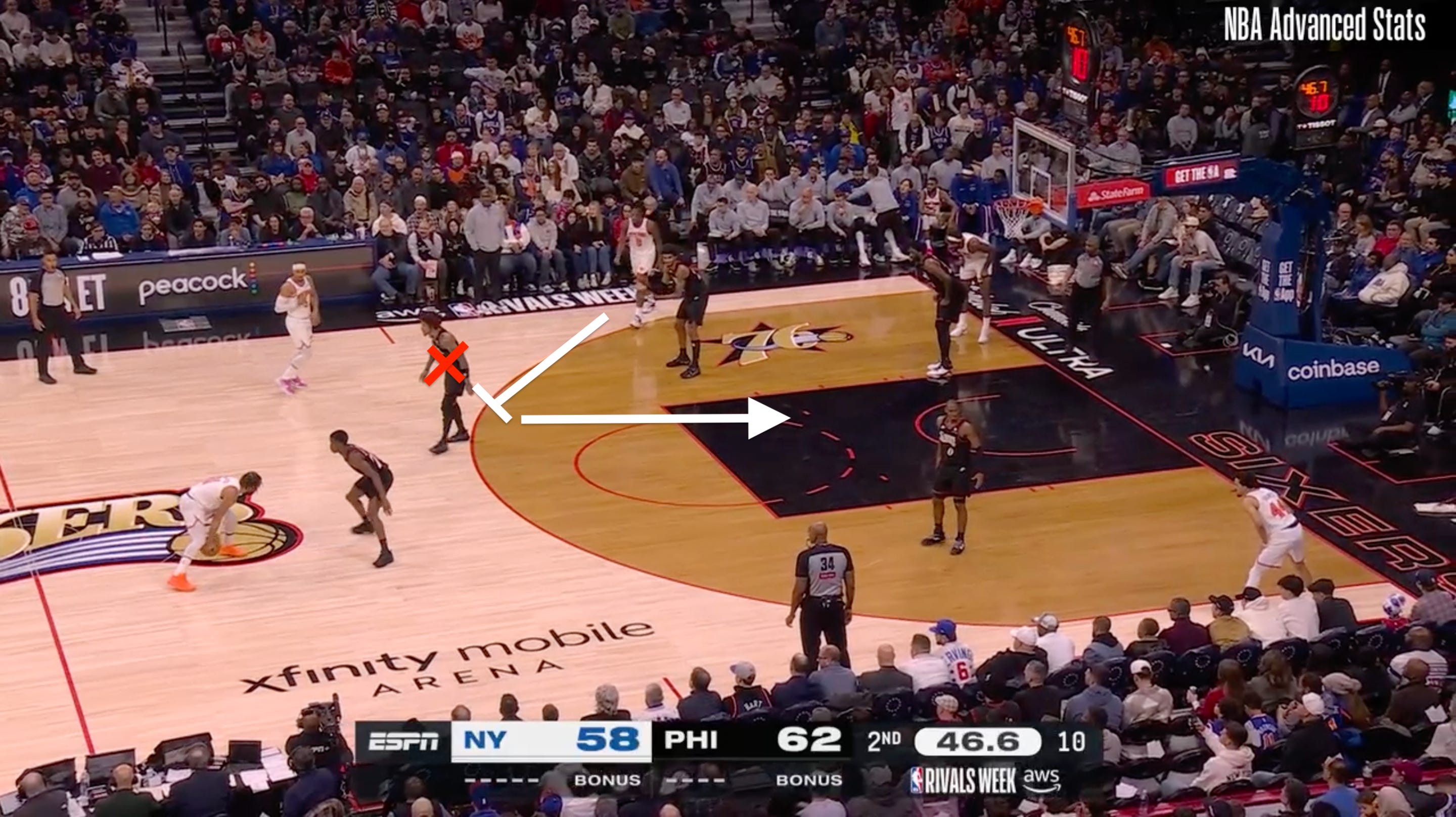
Some of my favorite help-beaters have come as high double or dig counters, because the Knicks face them the most and have found a clever way to attack— setting a flare screen on the player shading high. This works well for a few reasons: the shading defender doesn’t see it coming, and it acts as a switch-beater against switch-heavy teams. Some teams switch on the touch, giving the cutter (Anunoby) a clean slip or the wing (Hart) an open shot.
Bridges in particular makes a living off these, he’s a malleable screener and is quick on his cuts and slips. He probably beats the help the most on KAT and Brunson isolations, I’m not sure if that’s a role he has taken on himself, but he has become quite good at it. He operates similarly when the big gets it in the pinch post, he’s a strong off-ball screener overall.
Baseline Help
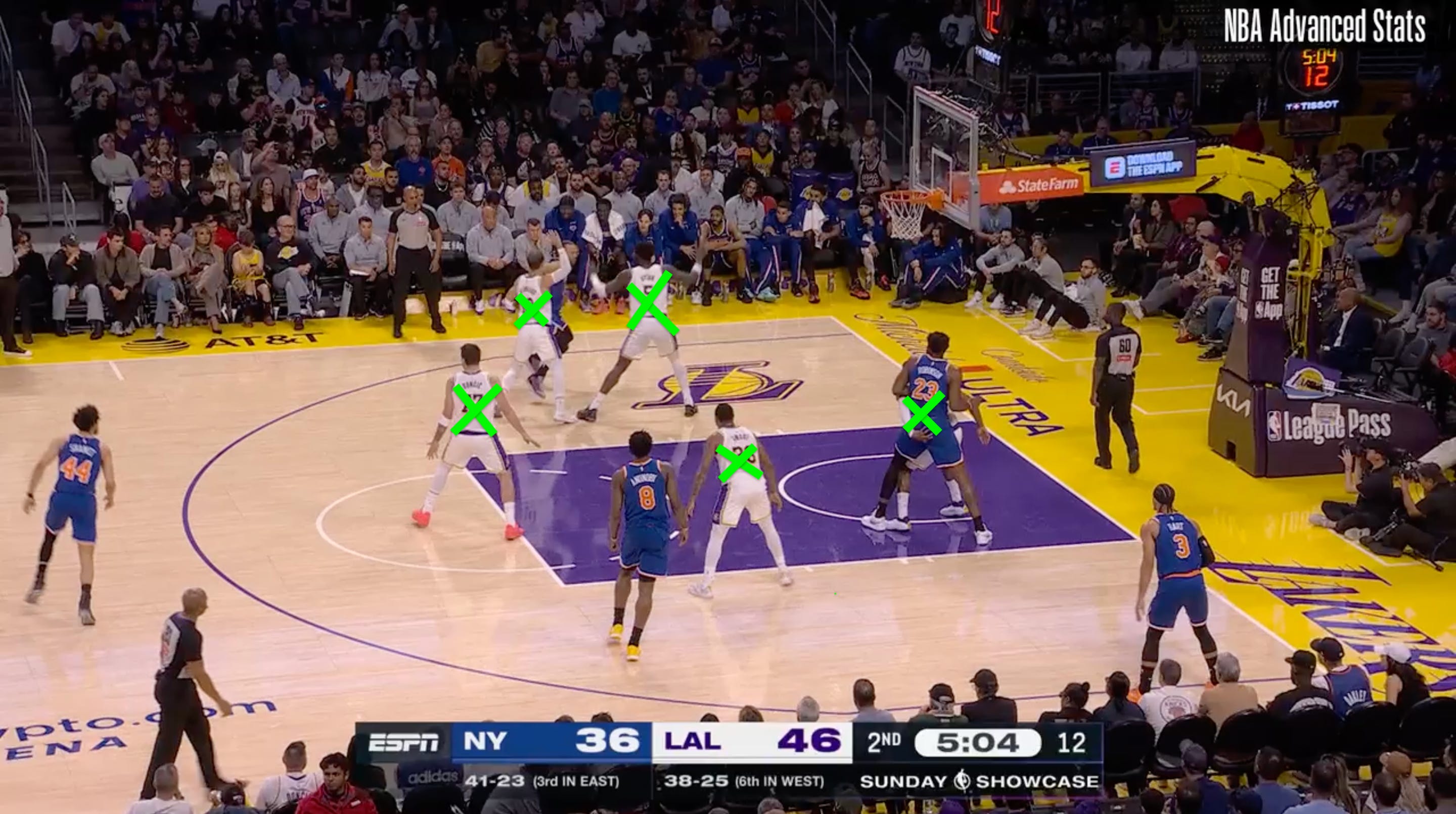
Typically we see help coming from the baseline on post-ups; however, baseline help can also be seen on isolations when there is flooding. Flooding is another term for sending weak-side players over in help, as we see the Lakers do against Jalen Brunson and many other stars. If you want a full tutorial on weak-side and baseline help on isolations, watch the Lakers game on March 8th, it’s a clinic.
In the image, this type of help is known as baseline help + bump. Anytime we add the term “bump”, it means that after the help is sent, the area vacated by the helper gets covered by the next help defender. So in the example, Ayton sends baseline help off Mitchell Robinson, and the Lakers have the weak-side defender bump toward Robinson.
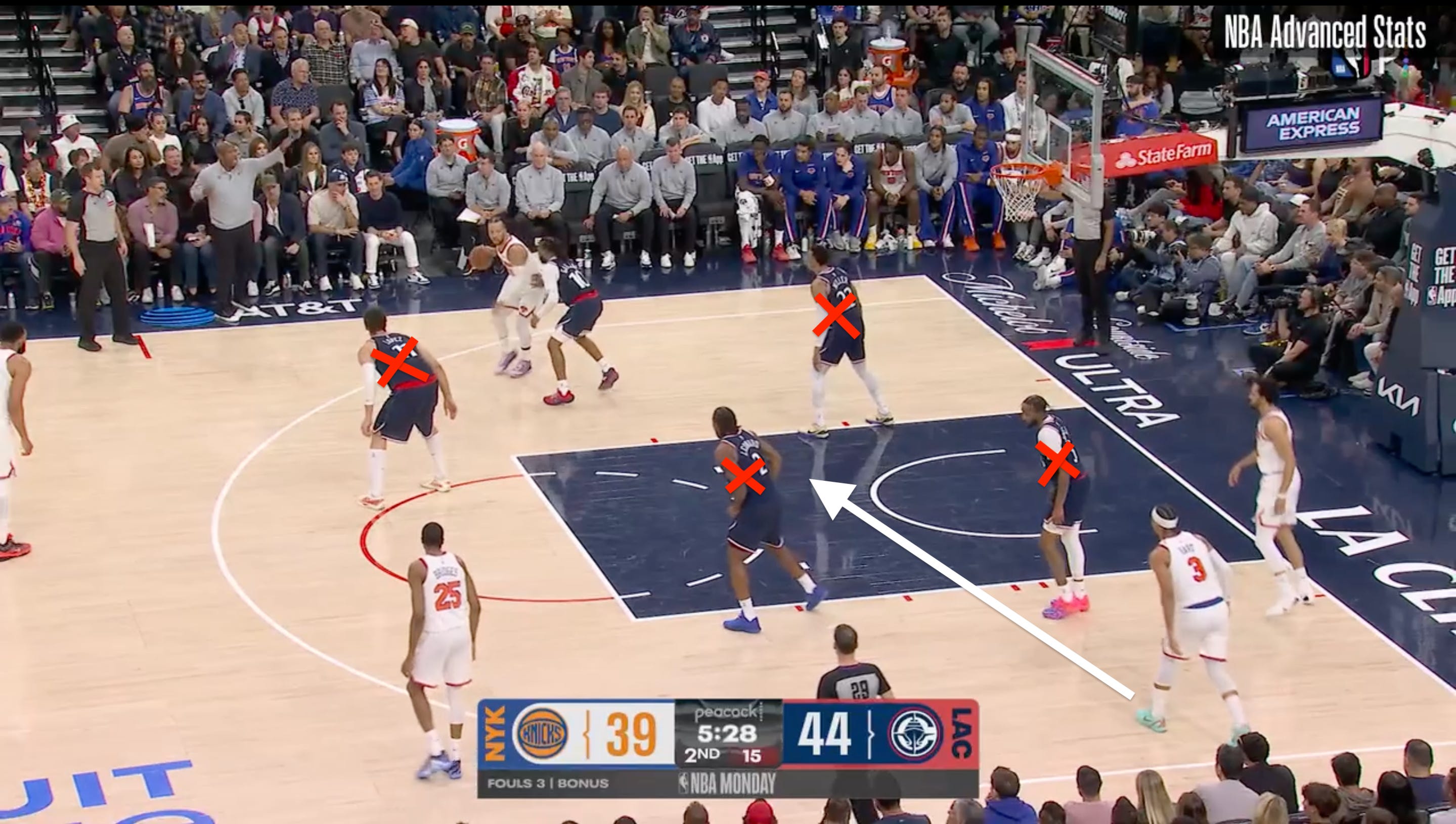
There are countless ways to counter baseline help and flooding. One of the easiest is weak-side activity, much easier in 5-out space. Players should not stand still, as they risk the help suffocating the action. In this play, Josh Hart cuts toward the paint, splitting the weak-side responsibilities of Derrick Jones Jr. Pressure on the rim or screening the bump defender (DJJ) is important, as opposed to everyone spacing out on the three point line.
Similar to how Bridges excels at flare screening and strong-side help-beaters, Hart's activity in help situations as a valve is the best on the team, and it needs to be. He’s the player teams are helping off the most, so making himself a threat off the ball is of ultra importance, whether flashing or cutting into the dunker spot.
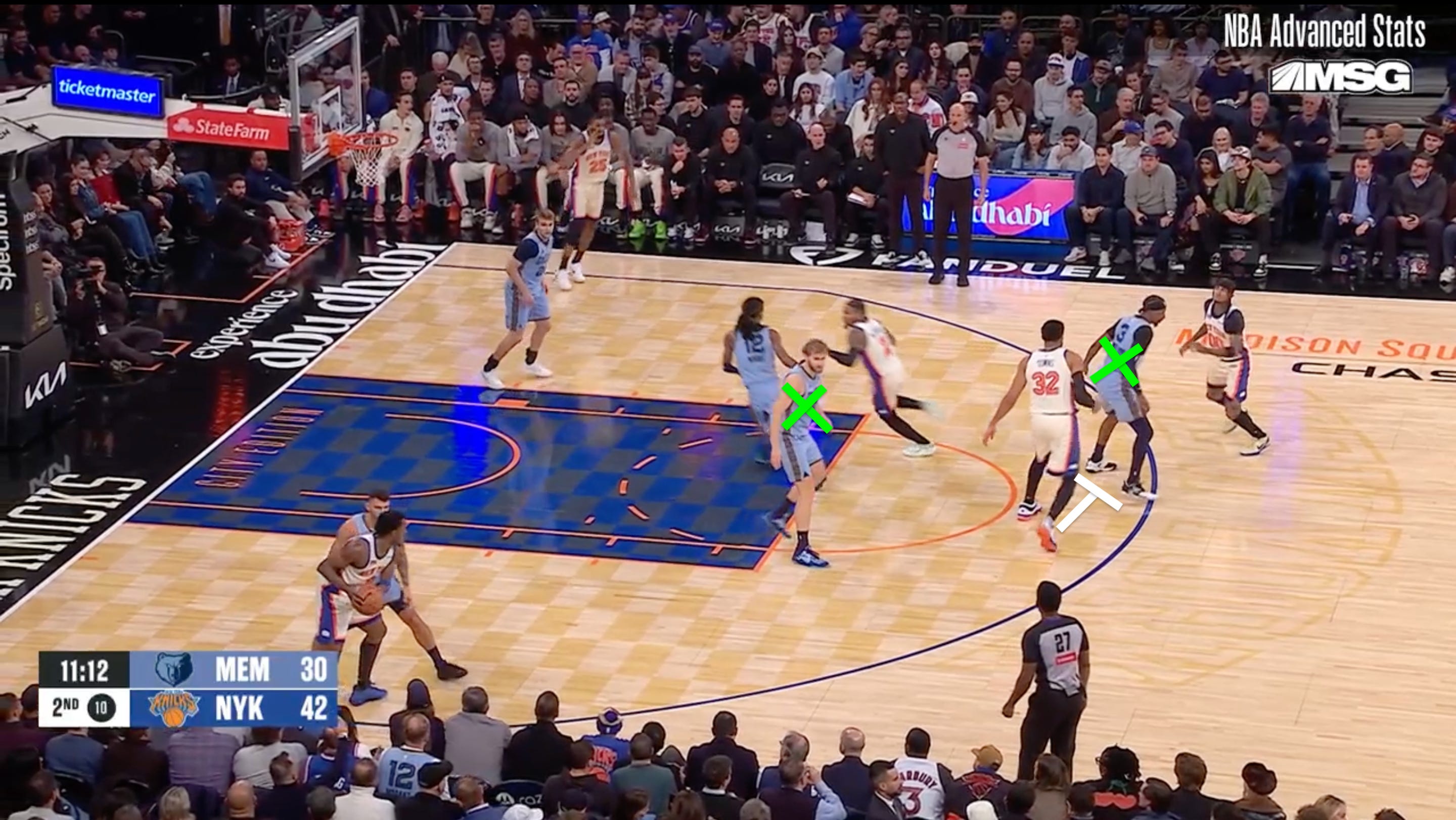
Most teams send their help against Towns' post-ups from the baseline, believing he reads strong-side help better out of the post than baseline help. Teams have schemed this way since last season. So even with Towns’ struggles in these situations, his teammates can help him out by cutting, as Bridges does here. We also saw what a bump looks like: in this example, Memphis opts not to bump to the vacated player, or simply missed their rotation.
Entry, Clear, Dunker
The cut weak-side has become a staple for the Knicks on Towns’ post ups. Especially when it’s Hart feeding to Towns in the post. I detailed this a bit when it came to clearing the side on a post up, but the dynamic of Hart-KAT is a bit different given the cross-match scheme teams throw at them. Essentially they can combine the two counters. Entry, clear gap → give dunker pressure, flash if needed. In a situation were Hart needs to be ultra active, this is exactly the way to approach it.
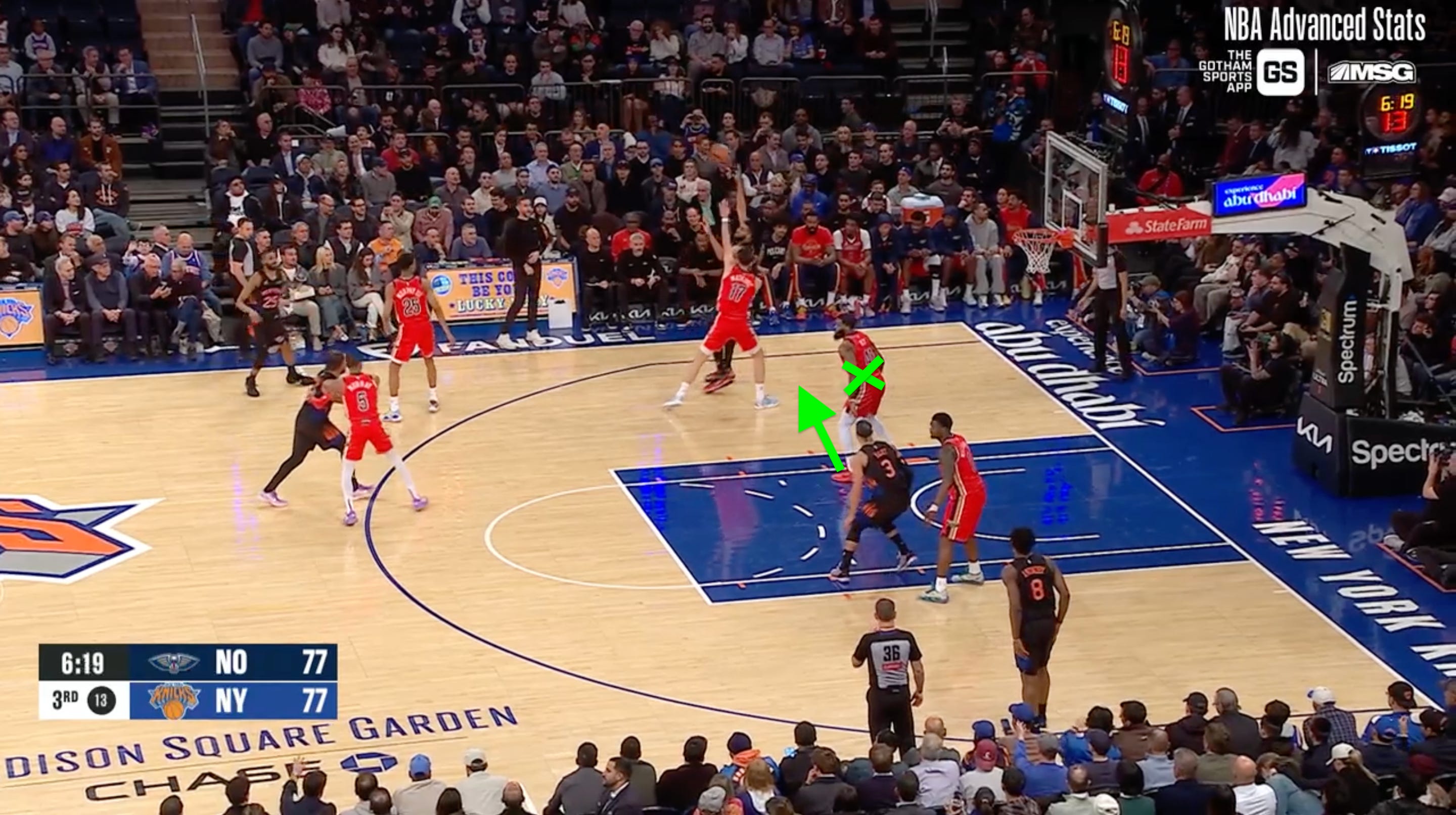
If Saddiq Bey looks to help on Towns' post-up, Hart is in the perfect position to apply pressure, splitting the weak side just as we saw earlier. This is how the Knicks intentionally set up Towns' post-up plays with Hart on the floor, always keeping him in prime position to be a threat.
Overview
Looking at the data, New York counters help more often when it comes from the strong side, 32% of the time, compared to 29% when it comes from the weak side on isolations and post-ups. In both instances, the Knicks generate better possession quality when they counter the help. They produce 1.19 expected points per possession (ePPP) when countering strong-side help, versus 0.98 ePPP when they do not. On the weak side the difference is less significant but still meaningful, 1.05 ePPP when they counter, compared to 0.94 ePPP when they do not.
Beating the help will be crucial for the Knicks down the stretch and into the playoffs, as opposing teams key in on New York's stars and deploy the high-level strategies we briefly discussed.
Your breakdowns are elite man, been watching Knicks different lately after seeing those “ghost screens” you pointed out in previous posts